Discover how your child can master communication skills in an engaging way, avoiding any negative labels.
Working on social communication improves overall communication and social interactions and quality of life.
Anaisha Edwards M.A. CCC-SLP
3/2/20261 min read
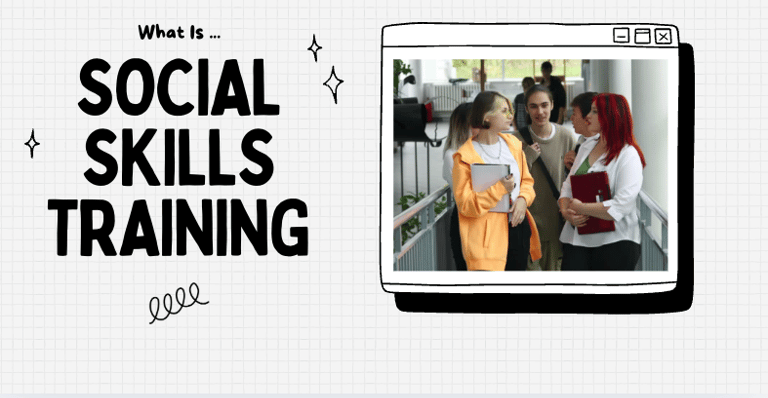
Enhancing social communication helps children, including those with ADHD and Autism, understand the unspoken social rules, like recognizing when a seat is taken in the classroom. For kids with these conditions, this can be challenging, but learning these cues reduces feelings of confusion and isolation. Beyond conversations and friendships, it's about grasping indirect requests, sarcasm, and nuances in language, alongside problem-solving and conflict resolution. We achieve this through engaging activities like video modeling, role play, and direct teaching. These are essential life skills used in everyday interactions with family, friends, and colleagues, especially crucial during teenage years for forming meaningful relationships outside the family circle.
At school, check if your child's school offers social skills training. Collaborate with a counselor to include your child in a group that regularly practices these skills with a diverse mix of students. Ensure your child has metalinguistic skills and is prepared for social learning. Skills in these groups might cover:
Taking Turns: Promoting balanced conversations and sharing pertinent information
Starting and Ending Conversations: Learning to initiate and conclude interactions smoothly.
Staying on Topic: Keeping discussions relevant and avoiding inappropriate changes.
Understanding Figurative Language
Perspective taking
However, social skills training extends beyond these when done outside school. It can include:
Social Media/Internet Safety and Oversharing
Conversational Rules and repairing communication breakdowns
Reading Social Cues: Interpreting non-verbal signals, emotions, and using suitable body language and expressions.
Making and Maintaining Friendships: Understanding friendship, setting boundaries.
Matching reactions to the level /intensity of a problem
Recognizing Dangerous Situations and Manipulation
Learning Communication Styles: Differentiating between assertive, aggressive, and passive-aggressive approaches.
Grasping implied meanings through indirect requests, sarcasm, jokes, slang, and idioms.
Differentiating Formal and Informal Language (e.g. adjusting speech to setting and communication partner).
Conflict Resolution
Life , Healthy work communication and adulting skills (e.g. harassment , goal setting, time management , email etiquette , self-advocacy)
Financial literacy : what’s credit, what’s impulse buying, saving , what is budgeting
Emotional intelligence: Character building , persistence , resilience
Relationships and Social skills - consent, stalking vs lurking vs lingering , keeping secrets, making and maintaining quality friendships , establishing and respecting, boundaries
Contact
Reach out for pediatric therapy inquiries.
Reach out and Learn More
407-730-0413
© 2025. All rights reserved.